Summary
Most clients don’t care how clever your website navigation is. They care whether your projects look solid. I’ve seen too many portfolios where the interface outshines the work – and that’s never a good sign. For me, the best websites are the ones you hardly notice at all – because the projects take over, and that’s exactly how it should be.
Keeping it Simple
Functionalist architecture insists that form follows function. A strong portfolio does exactly the same: no fake ornaments, no unnecessary corridors, just a direct path to the work. On the web that means layouts that give your projects space to breathe, navigation that stays invisible, and typography that frames rather than distracts. When done right, the result isn’t just functional – it’s beautiful in its clarity, much like van Rohe’s buildings.
Examples of Great Architecture Portfolios:
OnderTak – Architecture Collective

OnderTak is the practice of architect Laurien De Decker, based in Landegem, Belgium. The name combines onderdak (shelter) and tak (branch), a reflection of the studio’s vision: to design homes that feel protective yet open, connected to their surroundings, and able to grow with their inhabitants.
The website presents this vision with a clear, minimal structure. What stands out is the use of a single accent color that complements the visualisations, reinforcing their tone rather than competing with them. Instead of dominating the page, the design quietly supports the images – making the portfolio feel coherent and carefully edited.
Mi Zhou – Architect & Researcher

Mi Zhou is an architectural designer with a cross-cultural background spanning China, Australia, and the United States. She studied at Nantong University and the University of Adelaide, and is currently pursuing a Master of Science in Advanced Architectural Design at Columbia GSAPP in New York. Her projects move between architecture, photography, and design research, often exploring collective memory, ecological resilience, and the poetics of everyday spaces.
The design is stripped to essentials: white background, crisp sans-serif typography, and a sparse menu. Projects open into large visuals with minimal text, giving drawings and photographs full attention. The site feels light and uncluttered – almost like a sketchbook carefully edited for clarity.
Joos Architectuur – Architecture Studio

Joos Architectuur is a young Belgian practice led by Thomas Joos. His work focuses mainly on private homes, balancing contemporary lines with a warm, livable character. Before founding his own studio, he gained experience at several local firms, which shows in the combination of precision and approachability in his projects.
The website reflects this attitude. A clear logotype anchors the page, supported by a minimal menu. Projects are introduced with a single strong photograph and the name – nothing more, nothing less. On desktop the grid feels generous, while on mobile it becomes even sharper: image plus title, perfectly legible, perfectly direct.
https://www.joos-architectuur.be/
Acquabella Studio – Interior Design

Acquabella Studio is an interior design practice founded by Aleksandra Koroleva. The studio works internationally, with projects in Europe, the Middle East, and Asia, focusing on high-end residential and hospitality spaces. Their approach blends architectural structure with interior intimacy, always attentive to materiality, light, and detail. The name Acquabella comes from a district in Milan, whose sense of elegance and refinement continues to inspire the practice.
The website carries the same sense of elegance. A light layout, generous spacing, and well-chosen typography give the projects room to breathe without distraction. Nothing feels forced or decorative – the design simply reflects the studio’s own approach: understated, precise, and quietly sophisticated.
LUMS – Living and Working Spaces

LUMS is led by a home organiser and psychologist with 13 years of experience, based in the Gard region of France. The practice focuses on optimising living and working spaces, with services tailored to individual needs and pace.
The website reflects this orientation with a clear, minimal structure. A bold logotype anchors the page, while projects and services are laid out in a simple grid. Navigation is stripped back, so the emphasis stays on content rather than interface. Yet the site also has a playful side: the use of ornamental images gives it a surprising, almost entertaining quality that makes it stand out.
Al Ratito Studio – Design Curation

Al Ratito Studio was founded by Nadia Guitteau, a Paris-born curator and scenographer who lived in Los Angeles for over twenty years before establishing the studio in Mexico City. Her work moves between design, storytelling, and curation, often collaborating with local artisans and designers. The practice is rooted in craftsmanship, cross-cultural exchange, and an eye for sculptural objects that carry strong presence.
The website reflects this curatorial spirit. A calm grid of images presents furniture, objects, and installations with clarity, while the sparse navigation keeps attention on the works themselves. The combination of large visuals and minimal interface feels more like an exhibition than a typical portfolio site – precise, elegant, and carefully staged.
How Were These Websites Built?
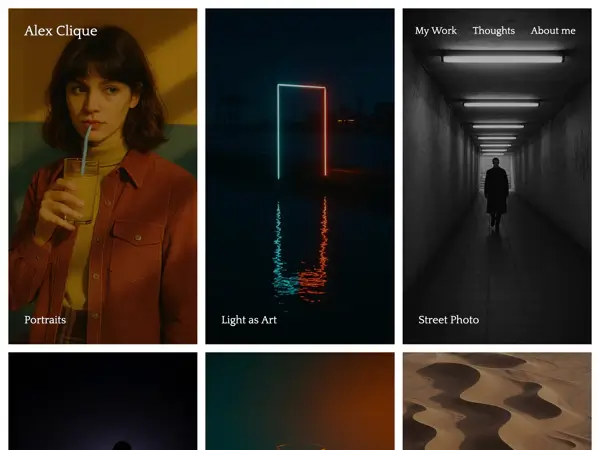
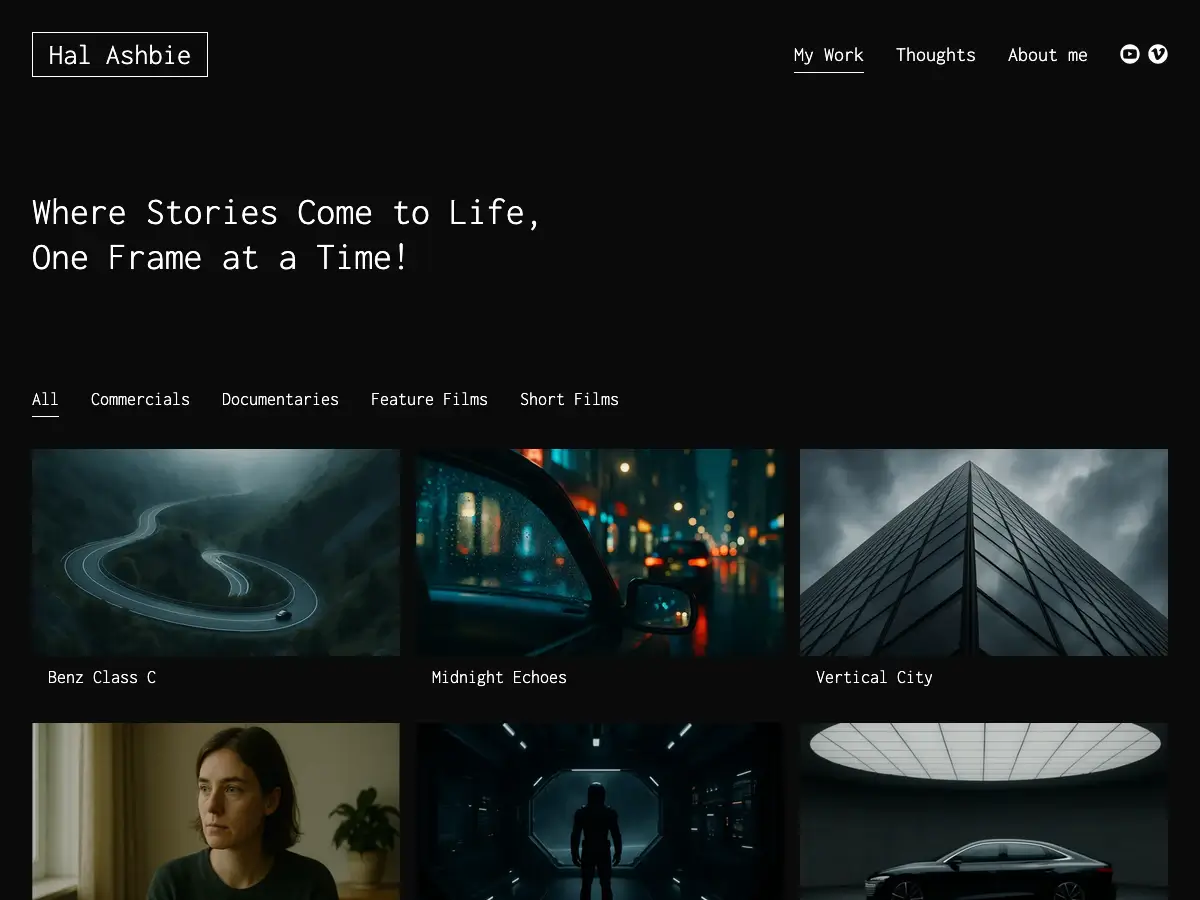
All of the architecture portfolios featured in this article were built with the Minimalio WordPress theme – a minimalist theme created specifically for designers, architects, and creative professionals who want their projects to take center stage. Minimalio provides a clear framework that highlights drawings, photos, and project details without unnecessary clutter.
Why It’s Ideal for Architects:
- Present projects with large, high-quality images and clean typography
- Organize work into dedicated portfolio pages with simple navigation
- Use flexible grid layouts that adapt seamlessly to desktop and mobile
- Keep the focus on the projects, not the interface
Minimalio is available in a free version to get started quickly. For more advanced features, the Premium Plugin turns it into a complete professional portfolio solution – making it easy to import demos, customize layouts, and build a site that feels as carefully considered as the projects it presents.